



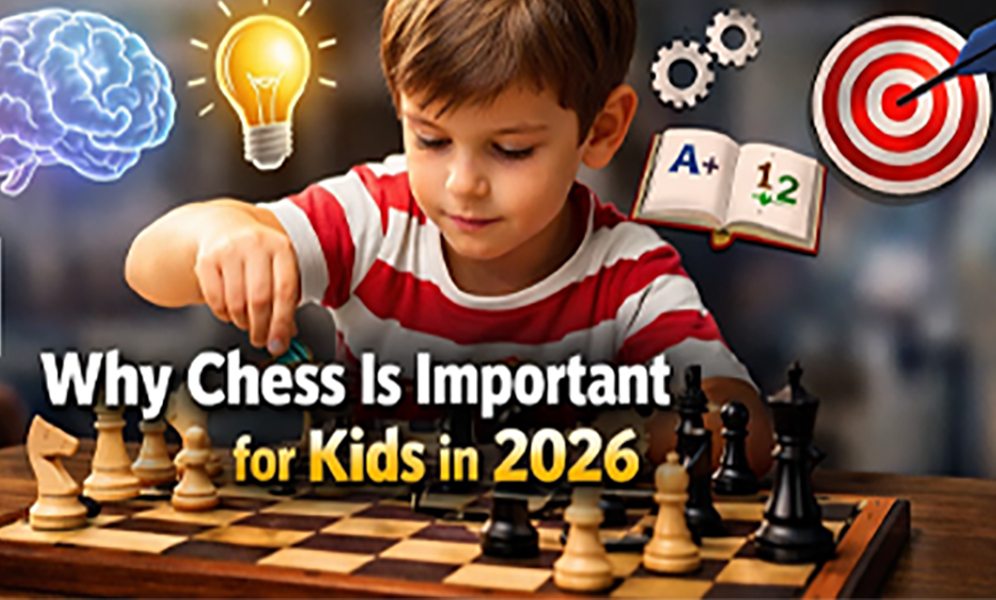
In 2026, children are growing up in a fast, digital, and distraction-heavy world. Mobile screens, short attention spans, and academic pressure are common problems. Chess stands out as one of the most powerful tools to help kids develop strong minds, healthy thinking habits, and long-term focus.
Modern children struggle with concentration due to constant digital stimulation. Chess requires players to sit, think, and plan every move carefully. Regular chess practice trains the brain to focus for longer periods, which directly helps in studies, exams, and daily learning.
Chess is a game of decisions and consequences. Every move teaches a child to analyze situations, predict outcomes, and solve problems logically. In 2026, where analytical thinking is more important than memorization, chess gives kids a clear advantage.
Remembering positions, patterns, and strategies improves both short-term and long-term memory. Studies show that children who play chess regularly perform better in subjects like mathematics, science, and logical reasoning. Chess acts as a full workout for the brain.
Winning and losing are both part of chess. Children learn to handle pressure, accept mistakes, and stay calm under stress. These emotional skills are critical in 2026, where competition starts early and emotional intelligence matters as much as academic success.
Chess teaches kids that success comes from planning, discipline, and consistent practice. There are no shortcuts. This mindset helps children develop a strong work ethic that benefits them not only in chess but also in school and future careers.
Instead of passive screen consumption, chess engages children actively. Online and offline chess platforms, when used correctly, provide a healthy and educational alternative to gaming and social media addiction.
Skills learned through chess—decision-making, time management, strategy, and focus— are essential for careers in technology, business, science, and leadership. In 2026 and beyond, these skills will define success.
Chess is no longer just a board game. It is a modern learning tool that prepares children mentally, emotionally, and intellectually for the future. Introducing chess at an early age is one of the smartest investments parents can make in their child’s overall development.
Want your child to experience these benefits?
Book a free demo class with Archer Chess Academy and start their chess journey today.

Cookie preferences
We use essential cookies to run this website. Analytics and marketing cookies are used only after your consent. You can change your choice anytime from Cookie Settings. Cookie Policy
Choose which optional cookies Archer Chess Academy can use on this browser.
Required for core website features such as page navigation, forms, and security.
Help us understand visitor activity so we can improve the website and landing pages.
Help measure advertising campaigns and show relevant follow-up messages.
Read more in our Cookie Policy and Privacy Policy.