



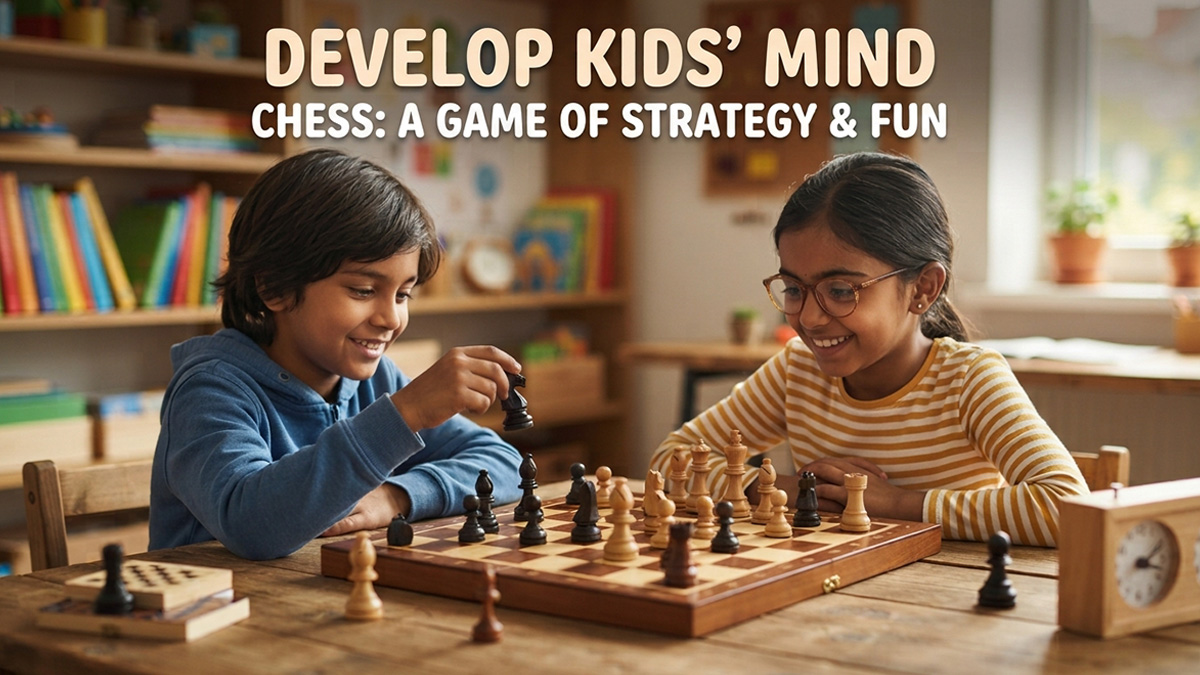
At Archer Chess Academy, we believe chess is more than a game — it’s a brain workout. Studies worldwide have shown that children who play chess regularly often perform better in school. But why does moving pieces on a board translate into improved grades in math, science, and reading?
To play chess well, kids must remember opening ideas, tactical patterns, and previous mistakes. This constant memory exercise strengthens recall, which directly helps in academics — from remembering formulas in math to facts in history.
Chess is a series of puzzles. Each move requires kids to analyze the position, weigh options, and choose the best path. This kind of critical thinking is the same skill they use when solving math word problems or tackling science experiments.
In today’s world of constant distractions, chess demands deep focus. Kids learn to sit still, think ahead, and ignore outside noise — a habit that translates beautifully to exam preparation and classroom learning.
Chess teaches cause-and-effect. Every move has consequences, just like in mathematics or logical reasoning tests. Children who play chess develop sharper analytical skills, which give them an edge in academic problem-solving.
Great chess players don’t rush. They think, plan, and execute carefully. These traits help kids manage their studies, prepare for tests systematically, and approach challenges with patience.
In our online chess classes for kids, we:
Connect chess puzzles with math-style problem solving.
Teach kids to analyze their mistakes — just like reviewing test papers.
Run fun activities that strengthen both chess and academic skills.
Chess is more than a board game; it’s a tool for building smarter, sharper, and more disciplined learners. At Archer Chess Academy, we don’t just create chess champions — we nurture academic achievers.

Cookie preferences
We use essential cookies to run this website. Analytics and marketing cookies are used only after your consent. You can change your choice anytime from Cookie Settings. Cookie Policy
Choose which optional cookies Archer Chess Academy can use on this browser.
Required for core website features such as page navigation, forms, and security.
Help us understand visitor activity so we can improve the website and landing pages.
Help measure advertising campaigns and show relevant follow-up messages.
Read more in our Cookie Policy and Privacy Policy.